Object Design
Shirokage (白影)
The White Shadow Blade
Every great blade begins not with steel but with a name that refuses to settle, a lightsaber study in white core, blue penumbra, and the fourth-born son who forged it alone.
I. The Name That Carries Two Births
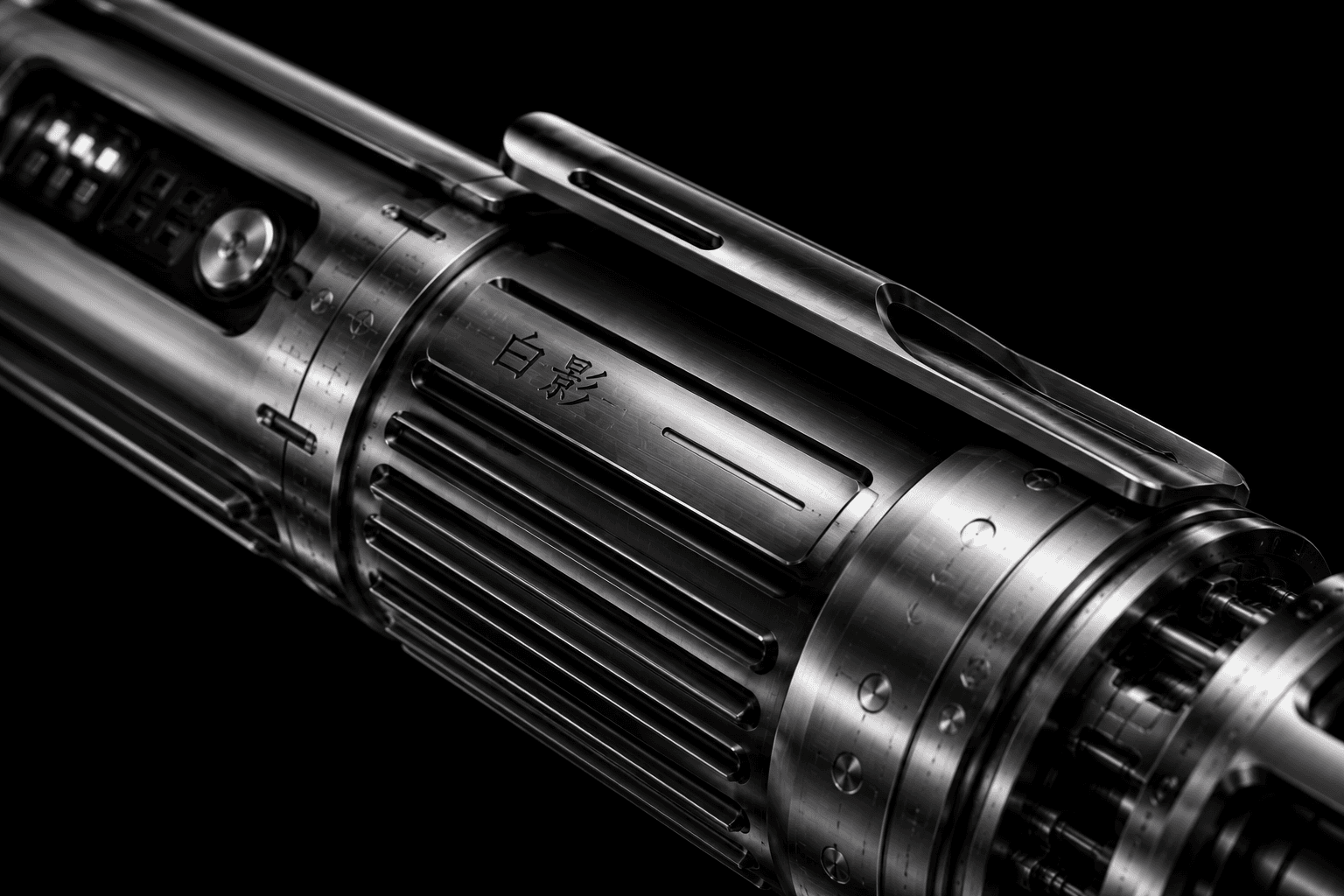
Every great blade begins not with steel but with a name that refuses to settle. Shirokage (白影), "White Shadow", is the name a fourth-born son gives to the weapon he had to forge alone, and it carries inside it the entire paradox of its wielder. Shiro (白) is the color of nothing-yet-written: the unclaimed page, the blank ingot, the white-hot moment before steel decides what shape it will hold for the rest of its life. Kage (影) is the trace a body leaves when it moves faster than the eye that watches it: the ninja's signature, the silhouette cast by a light that has already moved on. Bound together, the two kanji form a koan no Jedi master ever wrote down: a shadow cast by pure light has no body to belong to. The wielder of Shirokage is, by the name's own logic, sovereign, owned by no Order, no master, no lineage. He is the fourth son who inherited nothing and therefore inherited everything that was never claimed.
II. The Hilt: A Quiet Architecture of Lineage
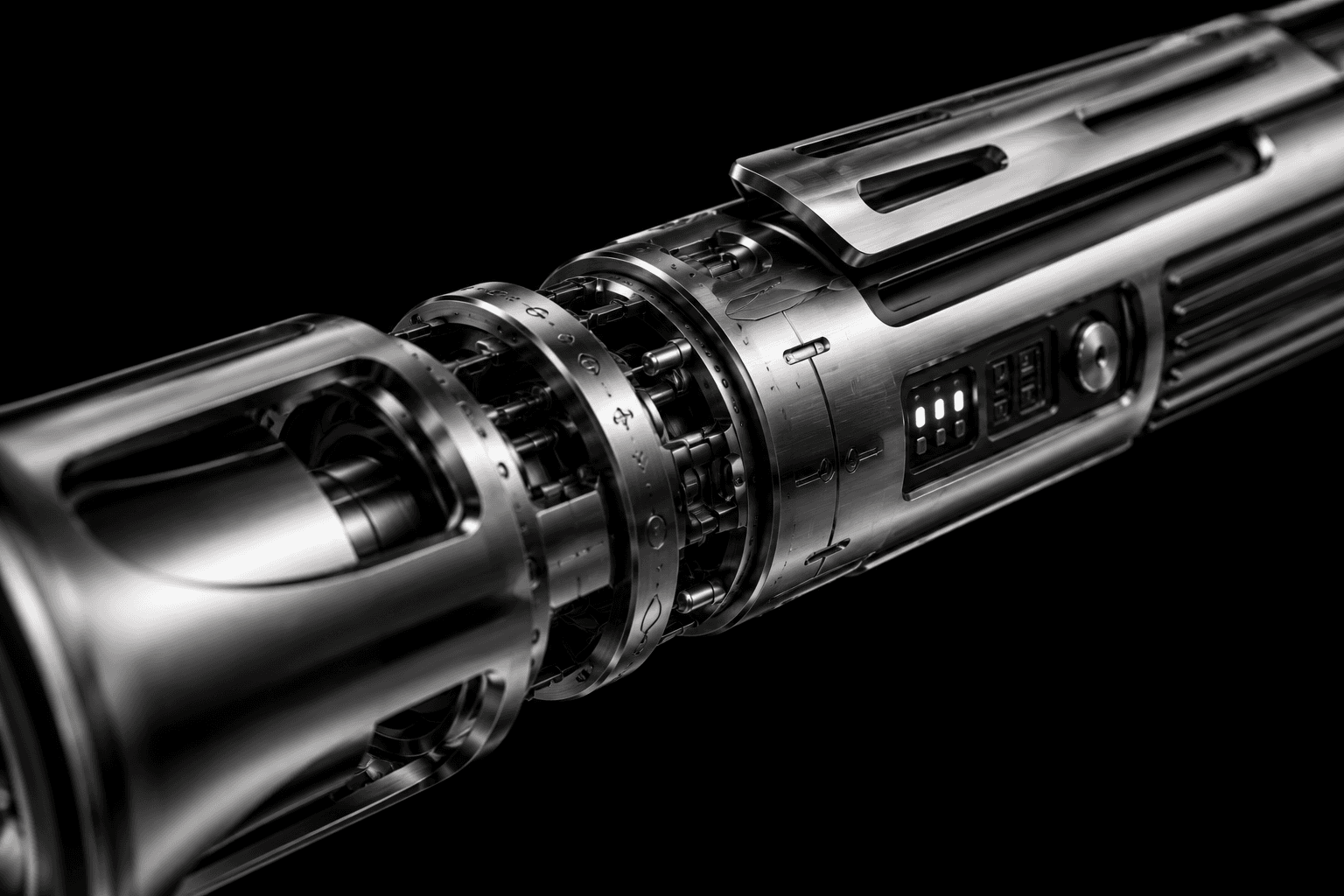
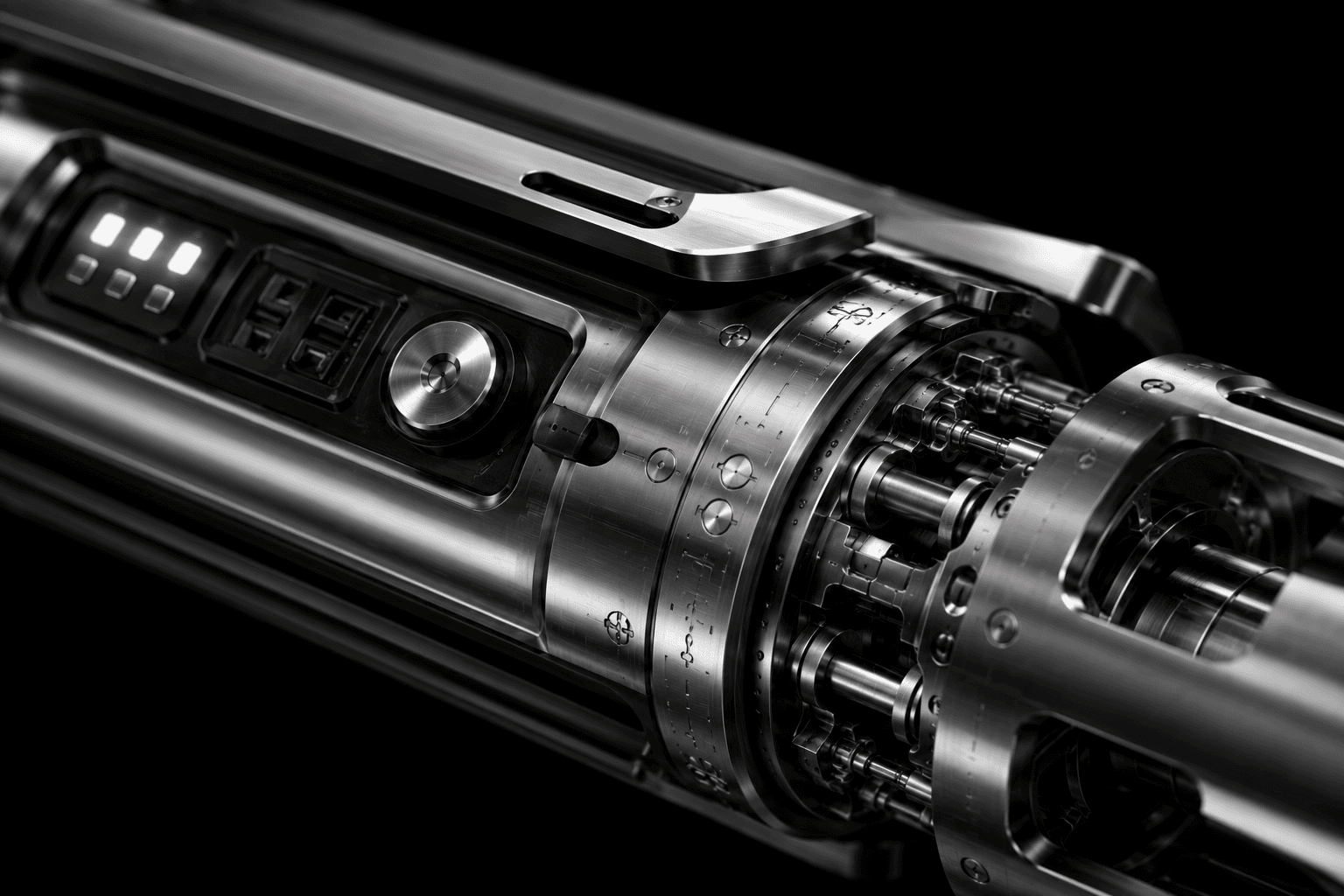
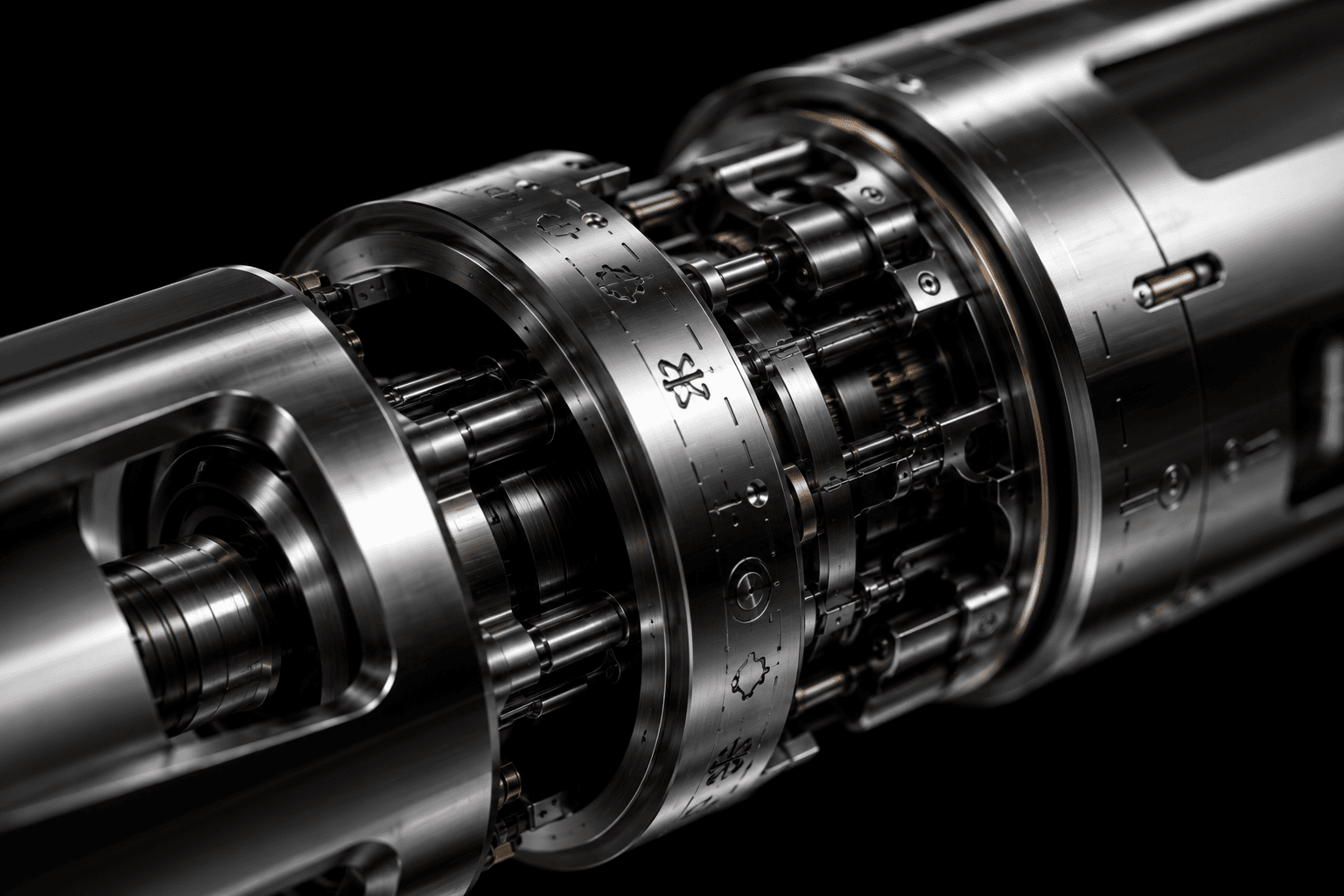
The hilt is cold-forged titanium, brushed to a low matte that drinks rather than reflects ambient light, so the blade itself becomes the only source of brightness in any room it enters. Running the length of the grip are four parallel hairlines of black anodization, one for each brother born before Shirō, etched at the depth their inheritance allowed. The fourth line is deeper than the others; he cut it himself, the night he understood that no one was going to hand him a blade. The activation crystal sits beneath a six-faceted sapphire window, not because Shirō has six brothers, but because Rokushō (六匠), "six crafts," names the disciplines he had to teach himself in the absence of a master: forging, meditation, geometry, breath, cipher, and the seventh-which-is-silence-and-therefore-uncounted. The emitter cup carries the kanji 四郎 in laser-etched seigaiha wave pattern, invisible from outside, revealed only when the blade ignites and casts its own light back into the wielder's palm. A signature legible only to the one holding it. Design as confession: this saber tells its story only to the hand that already knows it.
III. The Blade: White Core, Blue Penumbra
The plasma signature is what separates Shirokage from every blade in the galactic registry: a white core wrapped in a faint blue penumbra, the way mountain snow holds cobalt in its deepest crevasses. The white is shiroganei, the color steel makes the instant before it cools, the color Ahsoka chose when she refused both Orders, the color of a mind that has not yet been told what to think. The blue at the edges is the spirit-debt, the trace of Shiro the blue bear, the elder who lent the fourth son his name and his color before the blade was ever lit. No other Jedi, Sith, or unaligned wielder in record carries this chromatic combination, because no other wielder has this exact lineage: a fourth-born human son honoring an ursine namesake by carrying both colors at once. The blade hums at a perfect fourth below the canonical Jedi pitch, a lower, older tone, closer to a temple bell than a weapon. Ignition sounds like a kiln-door opening: a single low clung of metal agreeing to hold its edge, followed by the steady breath of contained plasma. The blade announces itself the way a forge announces a finished sword, not with a flourish, but with a settled silence.
IV. The Philosophy: A Weapon That Has Made Peace With Its Ending
In old samurai houses, the fourth son was sometimes sent to the temple, because shi (四) is the homophone of shi (死), death. The fourth son was the one raised closest to the void, the one expected to hold a blade without fearing what it meant. Shirokage inherits this lineage directly: it is a saber that has already made peace with its own ending, and this is precisely why it cuts cleaner than any blade that still believes it deserves to exist. The three pommel controls, Akeru (開ける, "to open"), Mamoru (守る, "to protect"), Tatsu (絶つ, "to sever"), encode the only three honest verbs a weapon ever performs. There is no setting for aggression, no mode for dominance, no glory in the kill switch's labeling: only the verb to sever, plain as a monk's vow. To wield Shirokage is to accept that the blade does not extend the wielder's will into the world; it withdraws the world's noise from around the wielder's stillness. White light, blue shadow, four hairlines on the grip, six crafts in the crystal, one fourth-born son who refused to inherit anyone else's war. The blade's full ceremonial name, spoken only when drawn in earnest, settles the whole matter in a breath: Shibanme ni umare, muttsu o kitaeta, born fourth, forged six.